Ultimate food and wine guide of Spain
In Spain, the best meals happen late, the best wines are regional, and the best tapas are found by following the locals. Our guide to the best food and wine in Spain covers what to know before you go.

Spain’s varied landscapes, climates, and history have produced regional cuisines so distinct that a meal in San Sebastian bears little resemblance to one in Seville, and the wines of Rioja taste nothing like those of Galicia. Understanding that diversity is the key to eating well in Spain. Our guide to food and wine in Spain covers what to eat, which markets to explore, and which regions and cities worth visiting. It’s the starting point for experiencing your Spain tour the way locals do: at the table, with a glass of something good, and in no particular hurry.

What makes the food and wine in Spain special
Understanding Spain’s regional food traditions
Spain regularly ranks among the top destinations in the world for food. What sets it apart is the sheer variety of what different regions produce. From Castile’s fertile plains to Galicia’s rugged coast, Spain’s geography shapes everything on the plate. Add centuries of Moorish, Roman, and New World influence and you get a food culture built on fresh, local ingredients, communal dining, and recipes refined over generations. Explore it on one of our Spain Food & Wine Tours.
Key ingredients and flavor profiles to know
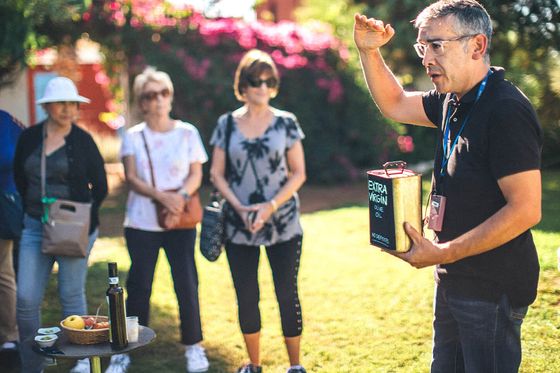
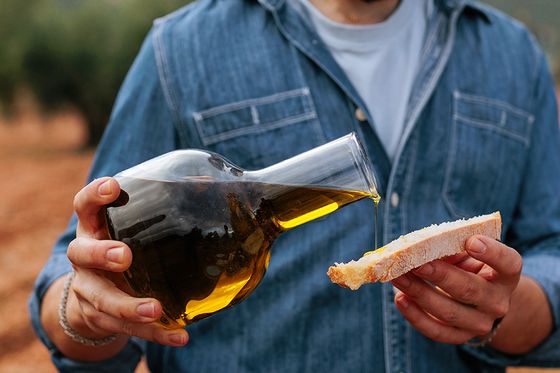
- Olive oil: Spain is the world’s largest olive oil producer, and each region makes its own variety—from mild Arbequina to robust Picual. Visit an olive oil farm on the Mallorca extension of our Food & Wine of Spain: Valencia, Barcelona & the Costa Brava tour, or explore La Rioja’s olive traditions on our Food & Wine of Spain: Cooking Classes, Wine Tastings & Spring Flavors tour.
- Jamon (cured ham): Spain’s most prized ingredient comes in two main forms: jamon serrano, from white pigs, and the more celebrated jamon iberico, from black Iberian pigs raised on acorns.
- Saffron: La Mancha’s hand-harvested saffron is the finest in the world—essential to paella and many of Spain’s most iconic dishes.
- Pimenton (smoked paprika): Made in the Extremadura region, Spanish pimenton comes sweet, bittersweet, or hot, and adds a smoky depth to chorizo, stews, and patatas bravas.

Best tapas and where to find them across Spain
What tapas culture means in different Spanish cities
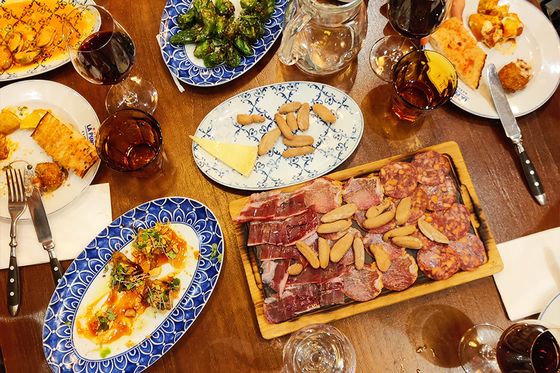
Tapas culture looks different depending on where you are. In cities like Granada, small plates may be served free with drinks, while in Madrid and Barcelona, you’ll order and pay per dish. Either way, tapas are meant to be shared during long, social meals that unfold over multiple stops rather than a single sitting.
Essential tapas and the best places to visit in Spain to try them
- Patatas bravas in Madrid: Fried potatoes with spicy tomato sauce and aioli. Every Madrid bar claims a superior version, and the debate over whose is best is taken seriously.
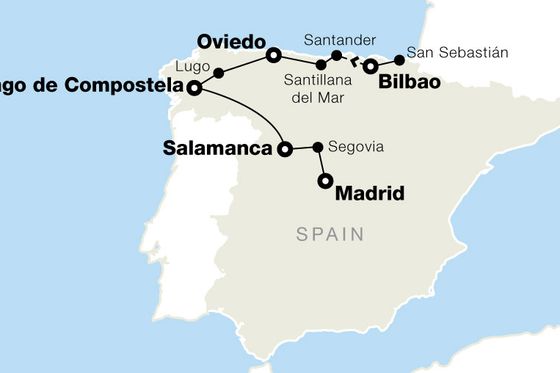
- Pintxos in San Sebastian: The Basque Country’s answer to tapas is a cut above—small bites piled on slices of bread and displayed along the bar counter. You pay on the honor system, taking what you like and keeping track yourself. Try them on our Food & Wine of Spain: Barcelona, Basque Country & La Rioja tour or learn to make them on our Food & Wine of Spain: Cooking Classes, Wine Tastings & Spring Flavors tour.
- Pan con tomate in Barcelona: Toast rubbed with tomato, olive oil, and salt—Catalonia’s simplest staple and the base for almost everything else.
- Gambas al ajillo in coastal regions: Picture shrimp in garlic oil, still bubbling in a clay dish. It’s a fixture on menus from Andalusia to Catalonia.
)
Spanish wine regions and what to drink where
Understanding Spain’s major wine-producing areas
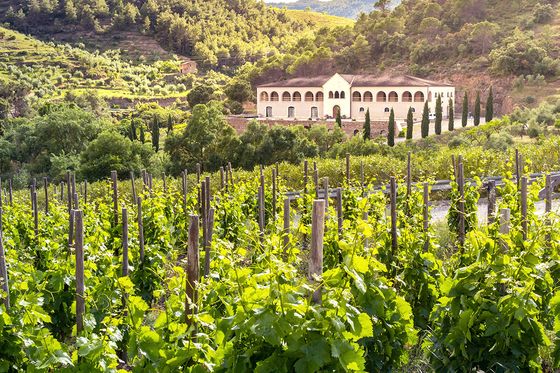
Spain has more land under vine than any country in the world, and the diversity of what’s produced is staggering—from the bone-dry whites of the Atlantic coast to the age-worthy reds of the Castilian plateau. Understanding a few key regions makes it much easier to order well. Winery visits are also one of the top food travel trends of recent years. Lucky for you, all of our Spain Food & Wine Tours include at least one winery visit—including some in the best Spanish wine regions.
Regional wine specialties worth seeking out
- Rioja in northern Spain: Spain’s most internationally recognized wine region produces tempranillo-based reds aged in oak according to a strict classification system (Crianza, Reserva, and Gran Reserva), each representing progressively longer aging and greater complexity. Visit a winery on our Food & Wine of Spain: Barcelona, Basque Country & La Rioja tour.
- Albarino in Galicia: Crisp, saline, and aromatic—a natural match for Galicia’s seafood and one of Spain’s most food-friendly whites.
- Cava in Catalonia: Spain’s sparkling wine is produced using the same technique as Champagne but with indigenous Spanish grape varieties. It’s drier and more mineral than many expect, and pairs well with everything from jamon to seafood. Visit a cava winery on any of our Spain Food & Wine Tours.
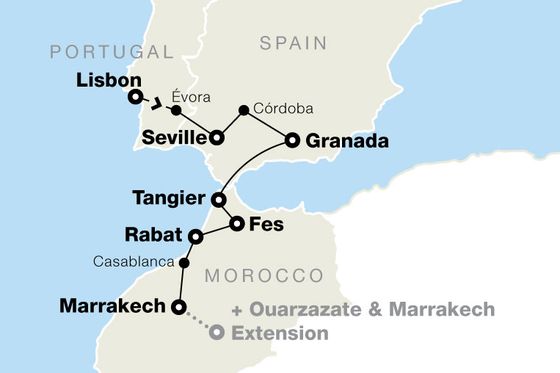
- Sherry in Andalusia: These fortified wines range from bone-dry fino to rich Pedro Ximénez. Visit Jerez de la Frontera (Jerez for short), known for its sherry production, on the Seville extension of our Food & Wine of Spain: Barcelona, Basque Country & La Rioja tour.
)
Regional food specialties you shouldn’t miss
Iconic dishes and their home regions
Traditional Spanish food makes the most sense when you understand where it comes from. The country’s distinct regions each developed cuisines shaped by local geography, climate, and history, which is why the best version of a dish almost always comes from its place of origin. These are the regional specialties worth seeking out on your Spain tour.
Must-try regional specialties
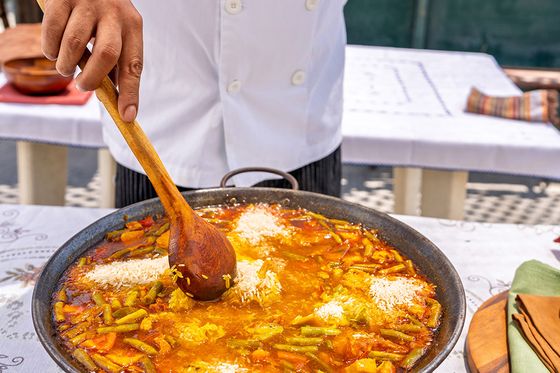
- Paella in Valencia: Authentic Valencian paella contains rabbit, chicken, and local beans—seafood paella is a coastal adaptation that came later. Valencia is the only place to experience the original, and you can learn to make it at a paella cooking class on our Food & Wine of Spain: Valencia, Barcelona & the Costa Brava tour.
- Pulpo a la gallega in Galicia: Boiled octopus on a wooden plate with olive oil, salt, and pimenton. Best eaten standing at a market or festival stall.
- Cochinillo asado in Segovia: Slow-roasted suckling pig with crackling skin. It’s traditionally cut with the edge of a plate to prove its tenderness.
- Gazpacho in Andalusia: Southern Spain’s cold tomato soup is one of the most refreshing things you can eat on a hot summer afternoon. Made with in-season vegetables and blended until smooth, it’s a warm-weather staple.
Discover Spain Food & Wine Tours

Markets and food halls for authentic experiences
Why Spanish markets matter for food lovers
Markets are central to how Spain eats, and they’re one of the things the country is rightly known for. At their best, they’re not tourist attractions but working food hubs where chefs, home cooks, and locals shop for the day’s ingredients. For travelers, spending a morning in a Spanish market is one of the most efficient ways to understand regional food culture.
Notable markets to visit across Spain
- Mercado de San Miguel in Madrid: This iron-and-glass hall near Plaza Mayor is now a gourmet food court. Visit on our Food & Wine of Spain: Barcelona, Basque Country & La Rioja tour.
- La Boqueria in Barcelona: Barcelona’s most famous market sits just off Las Ramblas and brims with stalls selling fresh seafood, produce, cured meats, and ready-to-eat tapas.
- Mercado Central in Valencia: It’s one of Europe’s largest markets, housed in a stunning Modernista building dating to 1928. Visit on our Food & Wine of Spain: Valencia, Barcelona & the Costa Brava tour.
- Mercado de Triana in Seville: It sits across the river from Seville’s historic center. Visit on the Seville extension of our Food & Wine of Spain: Barcelona, Basque Country & La Rioja tour.

Spanish food and wine customs to know before you go
Dining times and meal structure in Spain
Dining in Spain follows a later rhythm than most travelers expect. Lunch is the main meal, typically served from 2–4 p.m., while dinner rarely starts before 9 p.m. In between, locals gather for tapas and drinks, turning the evening into a gradual, social experience rather than a single sit-down meal. For more on what to expect before you arrive, see our Spain Travel Guide.
Etiquette and ordering tips
- Sharing is standard: Spanish meals are communal by nature. Dishes arrive family style to be shared, rather than plated individually. Order in rounds rather than all at once.
- Bread and cover charges: A basket of bread may arrive at the table unrequested in many Spanish restaurants and may carry a small cubierto (cover charge) of 1–3 euros per person.
- Wine by the glass or bottle: Wine with meals is standard in Spain, and regional wines are almost always the best-value option on any menu. In wine country, ordering the house wine is rarely a mistake.
- Tipping customs: Service is included in Spain, and tipping is optional rather than expected. Rounding up or leaving a few euros after a good meal is appreciated.

How to choose the right Spain Food Tour for you
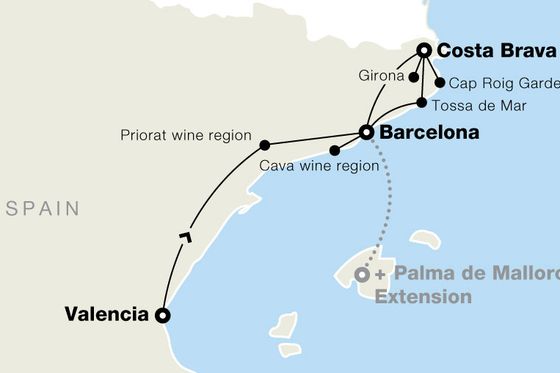
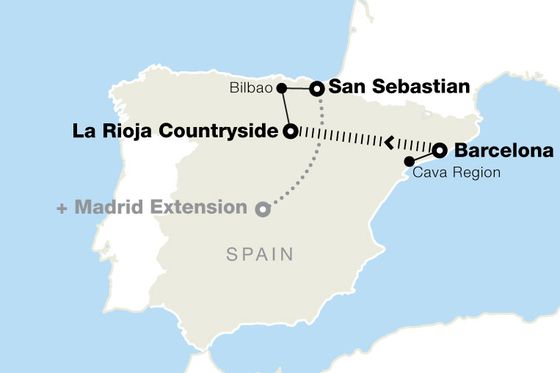
We offer several Spain itineraries built around culinary experiences. Our Food & Wine of Spain: Valencia, Barcelona & the Costa Brava tour covers the Mediterranean coast and focuses on Valencian paella traditions and Catalan food culture. Our Food & Wine of Spain: Barcelona, Basque Country & La Rioja tour heads north into pintxos country and Rioja wine territory. Our Food & Wine of Spain: Cooking Classes, Wine Tastings & Spring Flavors tour features more cooking classes and a Michelin-starred dinner in La Rioja. We’ll handle the logistics so you can focus on eating.
What to consider when selecting your Food Tour
- Regional food specialties you want to experience: Pintxos and Rioja are northern, paella and cava are Mediterranean. Pick the tour that puts you in the right region.
- Tour pace and free time for meals: All of our guided tours offer a mix of planned activity and free time, but some tours pack in daily food experiences while others allow more time to roam.
- Included food experiences vs. independent exploration: If learning technique matters as much as eating, our Food & Wine of Spain: Cooking Classes, Wine Tastings & Spring Flavors tour is specifically built around hands-on cooking. If you’d rather taste broadly across a region, our other Spain Food & Wine Tours offer more variety across different food experiences.
- Cities and regions covered: Each itinerary covers different ground and different culinary landscapes. Consider which regions you haven’t visited, which foods you most want to try, and where you’d most like to spend free time exploring independently.