The best Greek dishes to try in the Greek islands
Looking to dine on dishes drizzled with olive oil, sprinkled with feta, and seasoned to perfection with oregano—all with a heaping side of sunshine? You’re in the right place.

If you don’t already know, let us be the first to spill the gigante beans: The Greek islands feed travelers exceptionally well—and the best meals here are built on simple foundations (think: olive oil, fresh seafood, local vegetables, and recipes that haven’t changed in generations). This guide covers everything travelers need to know before sitting down at a taverna—from the essential Greek dishes to the customs that make dining in Greece one of the great pleasures of visiting. Whether you’re planning your first trip to Greece or returning to go deeper, here’s how to experience Greek island food culture the way it’s meant to be enjoyed.

Essential Greek island dishes every traveler should try
Classic Greek island appetizers and starters
In Greece, a meal rarely begins with a single dish. It begins with mezedes, a spread of small plates that arrive at the center of the table to be shared, grazed on, and lingered over. These starters are central to traditional Greek food culture and set the tone for the meal—fresh, flavorful, and meant to be enjoyed slowly with friends.
Must-try Greek island appetizers
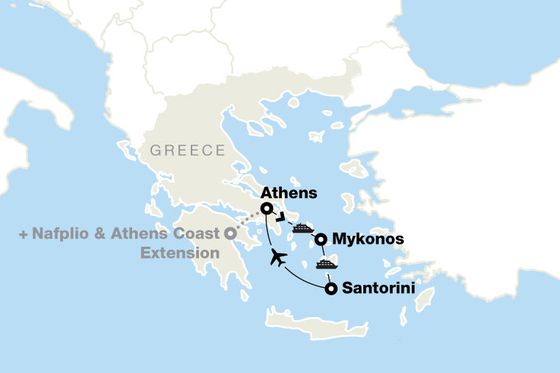
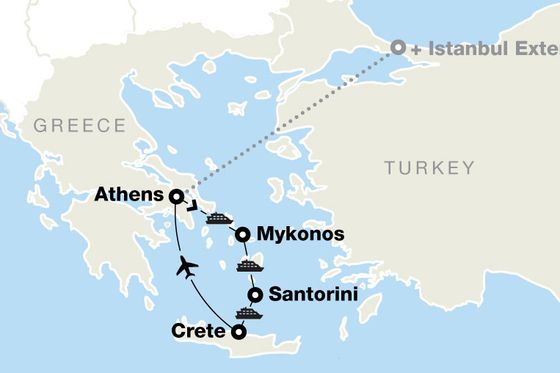
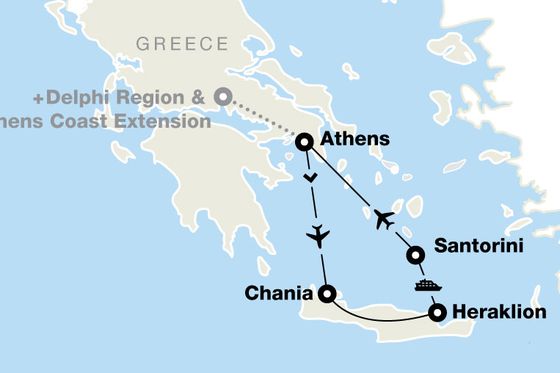
- Tzatziki: Yogurt with cucumber, garlic, and dill used as a dip or condiment. Learn to make it on our The Greek Islands: Mykonos, Santorini & Crete tour.
- Dolmades: Grape leaves stuffed with rice and herbs—cold as a starter or warm with lemon sauce. Homemade and taverna versions taste noticeably different (try both!).
- Saganaki: Golden fried cheese served sizzling in the pan. Some versions arrive at the table flambeed with ouzo.
- Fava: Creamy yellow split peas finished with olive oil, raw onion, and capers. Santorini’s version, made with local split peas, is considered Greece’s finest.

Iconic main dishes that define Greek island cuisine
Seafood specialties of the islands
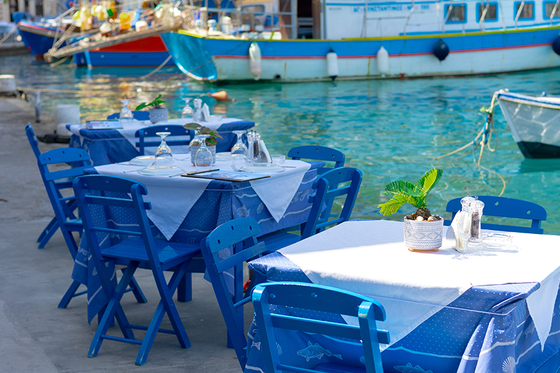
On most Greek islands, the menu follows the catch. Tavernas near the water list what arrived that morning, and the simplest preparation is almost always the right choice: grilled over charcoal, finished with olive oil and lemon, and served with bread. The Aegean and Ionian seas produce some of Europe’s finest seafood, and the island chefs’ greatest skill is knowing when to get out of the way.
Traditional Greek island main courses
- Grilled octopus: Tender, lightly charred, and finished with olive oil and lemon, it’s a classic at seaside tavernas from Mykonos to Crete.
- Fresh grilled fish: Sea bream, sea bass, and red mullet are most common. Choose your fish before it’s cooked and pay by weight—ask what came in that morning.
- Moussaka: This is a dish of layered eggplant, minced lamb, and a bechamel topping; the meat sauce is spiced with cinnamon and allspice. Try it on any of our Santorini tours.
- Souvlaki and gyros: Souvlaki is grilled skewered meat; gyros are the same meat rotisserie-shaved. Both come in pita with tomato, onion, and tzatziki.

Greek island salads and vegetable dishes
Fresh salads that showcase local produce
Greek island cooking draws heavily on the principles of the Mediterranean diet—seasonal vegetables, quality olive oil, legumes, and very little that has traveled far to reach your plate. The salads and vegetable dishes here reflect what’s growing nearby, and they’re as flavorful and satisfying as anything that comes off the grill.
Salads and vegetable preparations to enjoy
- Horiatiki (Greek salad): Chunky tomato, cucumber, green pepper, Kalamata olives, and a slab of feta—no lettuce. It’s the top traditional Greek food to try, according to our Greece Travel Guide.
- Dakos (Cretan barley rusk salad): Crete’s signature thick, twice-baked bread softened with ripe tomato and olive oil, topped with crumbled feta and olives. Try it on one of our Crete tours.
- Briam (roasted vegetables): Zucchini, eggplant, peppers, and potatoes slow roasted in olive oil and tomato. Served warm or at room temperature—works as a side or a vegetarian main.
- Gigantes plaki (baked giant beans): Large white beans baked in an herbed tomato sauce until creamy and deeply flavored. Found as meze or a main course across island tavernas.

Sweet treats and desserts from the Greek islands
Traditional Greek desserts and island pastries
Greek desserts are built around three things: honey, nuts, and phyllo. They’re rarely overly sweet and almost always best eaten fresh, ideally with a strong Greek coffee alongside. On the islands, the honey tends to be exceptional. Thyme honey in particular has an intensity and floral quality that makes it worth seeking out at local markets.
Must-try Greek island sweets
- Baklava: Crisp phyllo layered with walnuts, pistachios, or almonds and soaked in honey syrup. Nuts and spices vary by region. It’s best eaten the day it’s made.
- Loukoumades: Small fried dough balls soaked in honey and dusted with cinnamon—a Greek street food dessert found at food stalls and festivals.
- Galaktoboureko: Semolina custard baked between layers of phyllo and soaked in citrus syrup. Less famous than baklava but beloved across Greece.
- Local yogurt with honey: Thick strained yogurt topped with island honey, fruit, or crushed nuts. A popular Greek breakfast, dessert, or afternoon snack.

Beverages and drinks that complement Greek island cuisine
Traditional Greek island drinks
Drinking in Greece is inseparable from eating, and wine, spirits, and coffee all play a role in the social pace of dining. Ouzo arrives with meze, wine arrives with your entree, and a small glass of raki arrives at the end of a meal, whether you ordered it or not.
Drinks to experience on the islands
- Ouzo: An anise-flavored spirit that turns milky white when water or ice is added—always served with a small plate of meze. Drink it slowly.
- Greek wine: Assyrtiko from Santorini is the standout white—minerally, crisp, and shaped by volcanic soil. Try it on our A Week in Greece: Athens, Mykonos & Santorini tour.
- Greek coffee: Finely ground and unfiltered, served in a small cup with grounds at the bottom. The foam on top (kaimaki) signals quality.
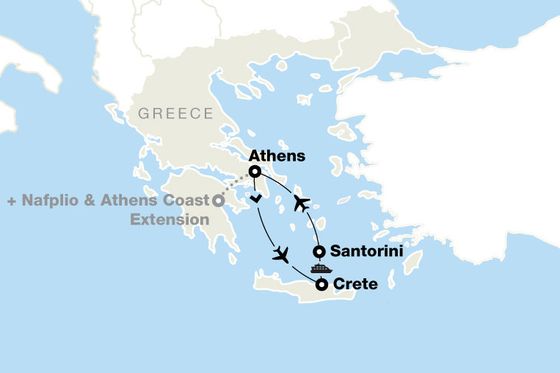
- Raki/Tsikoudia: Crete’s strong and clear spirit, distilled from grapes and served cold as a digestif and a gesture of hospitality. Often homemade in villages. Try it on our Greek Islands for Solo Travelers: Crete & Santorini tour.

When and where to enjoy the best Greek island food experiences
Feasting on classic Greek dishes is one of the best things to do in Greece, but timing and location shape the island dining experience as much as what’s on your plate. The best tavernas aren’t always the most visible ones, and eating on the local schedule—rather than the tourist one—makes a meaningful difference in what ends up in front of you.
Tips for finding and timing your Greek island meals
- Meal timing: Greeks eat lunch around 2–3 p.m. and dinner after 9 p.m. Tavernas may be closed or quiet between 5 and 8 p.m.
- Finding authentic tavernas: Look for family-run spots off the main tourist drag, handwritten menus with seasonal specials, and tables filled with locals. (Ask your Tour Director for recommendations.)
- Seasonal considerations: Spring and fall offer the best produce and the most relaxed restaurant atmosphere. In summer, reservations are key at popular spots. Winter closes some smaller island tavernas.
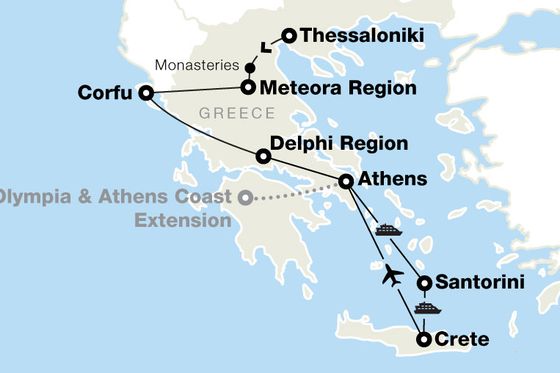
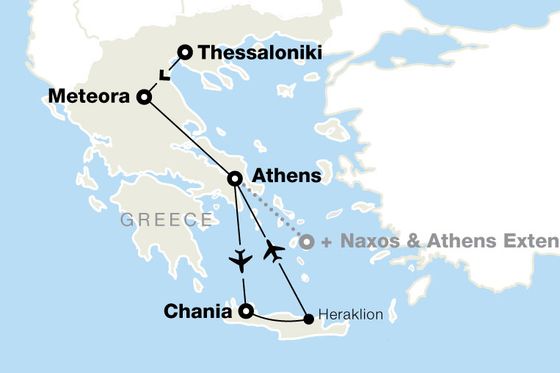
- Market visits: Local markets show what’s in season and what’s worth ordering. Morning visits offer the best selection. Visit one of our favorites, the Old Market in Heraklion, on our Food of Greece: Thessaloniki, Athens & Crete tour.
How to navigate Greek island dining customs and etiquette
Greek hospitality—philoxenia, or “love of strangers”—is genuine and runs deep. Taverna owners take feeding guests seriously, and the culture around dining is relaxed, generous, and communal rather than formal. A few cultural insights will help you participate fully in this warm, welcoming dining tradition.
Greek dining etiquette and customs to know
- Ordering and sharing: Order multiple dishes for the table and share everything. Take your time deciding—no one will rush you. Ask what’s good today.
- Pace of service: Meals are leisurely, and the Greek concept of siga siga (slowly, slowly) applies at the table. The check won’t arrive until you ask for it—that’s intentional, not an oversight.
- Tipping and payment: 5 to 10% or simply rounding up the bill is standard. Cash is preferred at smaller establishments. Check whether a service charge has been added before tipping.
- Complimentary offerings: Fruit, a small dessert, or a shot of raki at the end of a meal is often included as a hospitality gesture.


)