Lisbon Travel Guide: the best things to do, see, and eat
This Lisbon travel guide covers everything you need to plan your trip, from things to do and eat to where to stay and the best time to visit, so you can explore Portugal’s capital with confidence.

If Lisbon isn’t on your travel list yet, consider this your sign to add it. Portugal’s sun-drenched capital sits at the edge of the Atlantic with a surprising amount going for it for a city its size—two UNESCO World Heritage Sites, one of Europe’s great food cultures, a musical tradition unlike anything else on the continent, and enough history to fill a week of sightseeing while still only scratching the surface. This Lisbon Travel Guide covers the essentials: what to see, what to eat, when to go, and what to pack. Think of it as your starting point for planning a tour of Lisbon you’ll be talking about for years.
Lisbon travel basics
Before you embark on your trip to Lisbon, it helps to learn a few of the basics. The Portuguese capital is one of Europe’s most approachable cities, but the practical tips in this Lisbon Travel Guide will make settling in that much easier.
Currency: Portugal uses the euro. Credit and debit cards are widely accepted, but carry some cash for small cafes, market vendors, and traditional tascas (family-run taverns). A sit-down lunch typically runs 12-18 euros per person, and dinner at a mid-range restaurant runs 20-35 euros. Tipping isn’t as entrenched as it is in the United States, but rounding up or leaving 5-10% at restaurants is appreciated.
Language: Portuguese is the official language, but Lisbon is one of the more English-friendly cities in Southern Europe. Most people working in hospitality, tourism, and retail speak it well. That said, a few words of Portuguese go a long way. “Ola” means “hello,” “obrigado” (if you identify as male) and “obrigada” (if you identify as female) translate to “thank you,” and “por favor” means “please.”
Etiquette tip: While Spanish is very similar to Portuguese, keep in mind that some locals might consider it rude for you to fall back on Spanish. The two languages may seem interchangeable, but the most polite thing to do is give the country’s actual language your best try when possible.
UNESCO-listed sites: Jerónimos Monastery and the Tower of Belem are the two UNESCO-listed sites in Lisbon (Portugal has 17 total—plenty of reasons to keep exploring on your tour of Portugal!).
Best way to get around: Lisbon is most rewarding on foot, but be prepared—the city’s famous hills are genuinely steep, and the cobblestones are beautiful but uneven and can be slippery, especially on inclines. Check our packing recommendations for footwear tips. The historic Tram 28 is worth riding at least once for the experience. The metro is efficient for longer distances, and taxis and rideshares are inexpensive by Western European standards. When you join us on a tour of Lisbon, we’ll take you to all the must-see sites via private coach.

Best time to visit Lisbon
Lisbon is a true year-round destination. It sits on the Atlantic coast and enjoys more sunshine than almost any other European capital. That said, each season has a distinct character, and the right time to visit Lisbon depends on what you’re after. Check out our season-by-season guide to Portugal to learn more.
Visit in the spring for fewer crowds and shorter lines
Mild temperatures in the low-to-mid 60s, blooming jacarandas, and manageable crowds make spring one of the best times to visit Lisbon. It’s ideal for sightseeing without long lines, and outdoor cafes start to fill up as the city comes to life.
Visit in the summer for the beaches and museums
Summer is Lisbon’s busiest and hottest season, with temperatures regularly reaching the high 80s. Expect long, sunny days and lively energy. Beaches in nearby towns like Cascais are at their peak, and festivals fill the calendar. Visit major sites early, and plan museum stops during peak afternoon heat.
Visit in the fall for pleasant weather and fewer tourists
Fall is a great time for a relaxed Lisbon itinerary, since warm weather lingers, but crowds thin out. On a fall trip to Lisbon, you’ll be met with easier-to-get reservations, lower prices, and ideal conditions for walking tours and day trips outside the city.
Visit in the winter for lower prices and authentic atmosphere
Winter is Lisbon’s calmest, most affordable season. Expect mid-50s temps, occasional rain, and more locals than tourists. The holiday atmosphere in December is warm but not overwhelming, and you’ll have attractions largely to yourself. Pack a rain jacket and embrace the slower pace—this is authentic Lisbon.
)
What to see in Lisbon
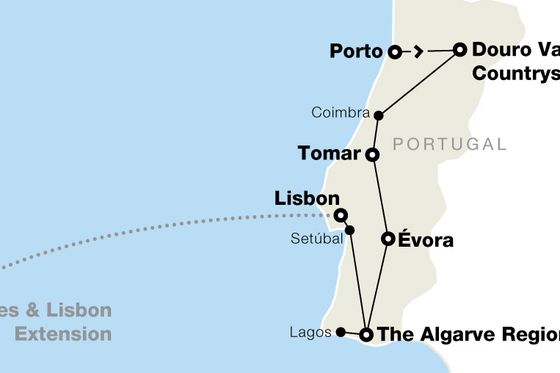
Lisbon’s most iconic landmarks are clustered along the water and in historic neighborhoods—most within easy reach of each other. Below are sites that belong on every Lisbon itinerary. You can see them all (plus more of what Portugal has to offer) on our Grand Tour of Portugal: From Porto to Lisbon.
Jerónimos Monastery
If you’re deciding what to do in Lisbon, start at Jerónimos Monastery. This UNESCO-listed site is a masterpiece of Manueline architecture and sits right on the Belem waterfront surrounded by other iconic landmarks. It’s a highlight of our Grand Tour of Portugal: From Porto to Lisbon.
Tower of Belem
This 16th-century riverside fortress puts you face-to-face with Portugal’s seafaring history. Vasco da Gama and Magellan passed these very walls before setting out to plot the map of the world. Visit it alongside the monastery on our A Week in Portugal: Porto, Evora & Lisbon tour.
The Monument to the Discoveries
A must for any Lisbon itinerary, this striking riverside monument captures the ambition of Portugal’s Age of Discovery—explorers carved in stone, surging up a ship’s prow. The mosaic compass rose at its base is worth finding, too. See it on our Lisbon, Seville & Madrid tour.
Get the scoop on what to see in Lisbon

What to eat and drink in Lisbon
You’ll find the best things to eat in Lisbon at neighborhood spots and pastry counters. From salt cod fritters to oven-warm custard tarts, Lisbon’s food culture is approachable and homey. To go deeper into Portuguese food culture, our Portugal for Solo Travelers tour includes a hands-on cooking class in Lisbon.
Pasteis de nata
These iconic custard tarts are creamy, lightly caramelized on top, and go best with a shot of espresso. Try them at the famous Pasteis de Belem bakery or small neighborhood spots. Find your favorite on our Food & Wine of Portugal: Porto, Douro Valley & Alentejo tour.
Bacalhau
Dried, salted cod has been a cornerstone of Portuguese cooking for centuries. Legend has it there are 365 ways to prepare it, one for every day of the year. Try it as pasteis de bacalhau, crispy fritters mixed with potatoes, herbs, and garlic.
Petiscos
Like tapas, petiscos, are small, shared plates that encourage long, leisurely meals. A spread might include presunto (cured ham), queijos (local cheeses), and salt cod fritters. For the full experience, order a glass of vinho verde and settle in.
Ginjinha
Lisbon’s signature drink is a sweet, ruby-red cherry liqueur, served ice-cold in tiny chocolate cups at hole-in-the-wall bars clustered near Rossio Square and throughout Alfama. Order it “com elas” (with boozy cherries at the bottom).

Fun things to do in Lisbon
Beyond landmarks, the best things to do in Lisbon are often about how you experience the city—wandering historic neighborhoods, enjoying live music, and taking in views. These activities bring Lisbon’s culture to life and are among our favorite things to do in Lisbon on a tour of Portugal.
Pass through the Bairro Alto
One of the best things to do in Lisbon is explore Bairro Alto, or Old Town, a hilltop neighborhood packed with restaurants, wine bars, and fado clubs tucked along narrow streets. It’s equally good for a long dinner and a nightcap or a day spent browsing independent shops.
Stroll through the Alfama neighborhood
Wandering Alfama tops our list of what to do in Lisbon. This ancient Moorish quarter predates the 1755 earthquake, with a maze of whitewashed alleys and steps leading to the Miradouro de Santa Luzia viewpoint overlooking red rooftops and the Tagus.
Experience authentic fado music
Fado is Lisbon’s soul music, a haunting, emotional genre with themes of longing, fate, and the sea. Many bars in Alfama and Bairro Alto offer live fado in the evenings, usually with no cover charge if you have a drink in hand. Add our Fado Show & Dinner excursion to your tour of Lisbon for an evening of soulful music.
Take a ride skyward on the Santa Justa Lift
For panoramic views over Lisbon without the uphill climb, the Santa Justa Lift is a genuine highlight. This ornate 1902 iron elevator connects the lower Baixa neighborhood to the upper Chiado district, solving Lisbon’s famous hill problem in style and doubling as an elegant photo op.
Enjoy sunset in Praca do Comercio
End a day of sightseeing at Praca do Comercio as the light softens over the Tagus. Lisbon’s grand riverfront square is framed by elegant yellow buildings, with wide stone steps leading to the water. “Get a bottle of wine and just sit on the steps close to the water,” said staffer Ivan.
Browse our most popular Lisbon tours

Souvenirs to buy in Lisbon
Lisbon’s best souvenirs are the ones that tell the story of what you experienced there—things made there, from materials found there, in traditions that have been practiced there for centuries. These are easy to pack, meaningful to bring home, and distinctly Portuguese.
Azulejo tiles
Portugal’s hand-painted decorative tiles make beautiful souvenirs that travel well and can be bought as individual tiles, coasters, trivets, and framed art. You’ll find everything from antique and salvaged blue and white tiles to modern interpretations.
Cork products
Portugal produces more than half the world’s cork, and Lisbon’s shops sell handbags, phone cases, and shoes made from it. (Bonus: It’s also a sustainable material.) Visit a cork factory on our A Week in Portugal: Porto, Evora & Lisbon tour to grab a keepsake at its source.
Portuguese ceramics
Hand-painted pottery has been a Portuguese tradition for centuries. Look for the iconic rooster of Barcelos, blue-and-white serving pieces, or hand-painted figurines. Artisan shops in Alfama tend to carry more authentic work and can wrap pieces for travel if you ask.

What to pack for a trip to Lisbon
Hills and sunshine define the Lisbon packing list. Cobblestone streets are steep, and the sun is strong, even in shoulder seasons. Get those two right and the rest of your Lisbon tour will fall into place. Here’s what to put in your suitcase before you go.
Comfortable walking shoes
Bring broken-in sneakers or walking shoes with real arch support and good grip (new shoes are a fast track to blisters by day two). Consider packing a second pair to alternate days and give each pair time to dry if you get rain.
Sun protection
Lisbon gets more sunshine than almost any other European capital, even in shoulder seasons. Pack SPF, sunglasses, and a hat whenever you’re traveling. The sun is strong, and a few hours on the Belem waterfront or a cafe terrace add up quickly.
Day pack or crossbody bag
A crossbody bag or anti-theft backpack keeps essentials close without requiring constant watch. Lisbon is generally safe, but like any busy city, crowded areas attract pickpockets. Keep your bag zipped and enjoy your tour of Lisbon without worry.
Rain gear for winter trips
Lisbon is mild year-round, but November through February bring regular rain. A compact rain jacket takes up minimal space and saves the day when the weather turns. Layering is never a bad idea, especially in spring and fall.

Lisbon travel FAQs
Traveler photos from Lisbon